A Tired Superpower in a Restless World
China appears 21 times in just 29 pages. Economic statecraft is explicitly framed as a national security tool to counter Beijing’s growing reach.. world does not pause for America to recover. In Asia, India and Russia strengthen their partnership with sixteen new agreements..
COMMENTARIES
Asanga Abeyagoonasekera
12/21/20254 min read
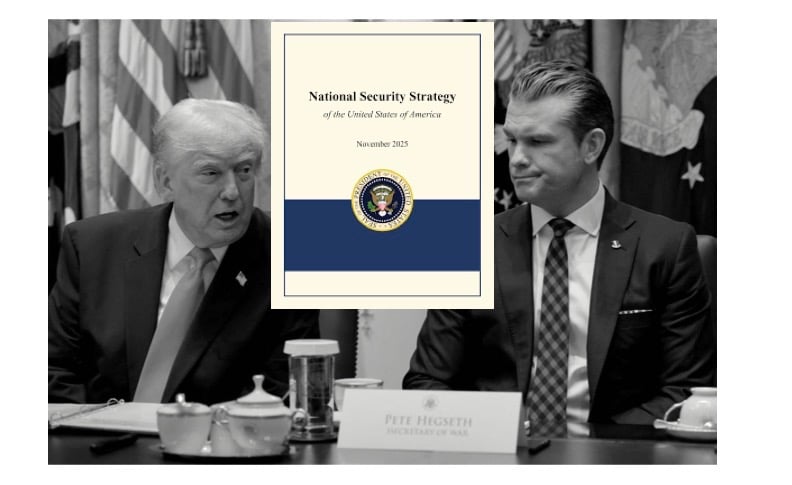
WASHINGTON – Every nation seeks to articulate the truth of its own survival. The United States does this through itsNational Security Strategy (NSS), a mirror reflecting both its fears and ambitions. It is the document of a superpower that remains unmatched but undeniably exhausted—worn down by “forever wars” and decades of misjudgment. Yet the world does not pause for America to recover. In Asia, India and Russia strengthen their partnership with sixteen new agreements, expressing interest in technology transfers and supply chains for Russian-origin systems. It is, in many ways, a quiet triumph for Moscow, and perhaps for one of its operatives: Andrei Bezrukov (cover name Don Heathfield), a former Russian spy who once studied the future from my workplace within the Millennium Project in Washington, before being unmasked and returned to Russia in 2010. Bezrukov understood that infiltrating the future could become a decisive advantage for the Kremlin.
Now positioned deep within Russia’s strategic planning after the invasion of Ukraine, he champions the export of Russian cybersecurity and IT systems across the BRICS network, with India as a vital target. Catherine Belton from The Post warns that such projects give Russia the leverage to shape parts of India’s tech future—balancing its position against both the West and China.
The United States confronts more than external threats. Internal betrayal has surfaced as well, with Ashley J. Tellis—long considered a leading architect of U.S.-India relations—charged with leaking thousands of classified documents to Beijing’s clandestine networks. Against this darker backdrop, the new NSS casts a cold, honest eye on security operations both inside and beyond America’s borders. It calls on allies to strengthen their own defensive capacities and to uphold a rules-based order that is growing increasingly fragile.
In shaping its response, the Trump administration reaches back two centuries to reawaken the Monroe Doctrine. On its anniversary—2 December—it introduced a new corollary centered on hemispheric defense. The new “Trump corollary” to the Monroe Doctrine will add new resources from intelligence, military, and law enforcement. The NSS warns that “non-hemispheric competitors” have gained troubling footholds in the Americas, threatening U.S. economic and strategic interests. The document also acknowledges how deeply Washington misread China, believing that openness would transform Beijing into a cooperative pillar of the international order. Instead, China has become a “near-peer” rival while the United States has remained rooted in outdated assumptions. The Middle East, too, is reconceived not as a mission of democratic transformation but as a pragmatic theater of energy security and vital chokepoints. America’s foreign policy is turning inward—less a guardian of universal ideals, more a defender of its own continental core.
Europe receives its own warning: identity cannot endure without vigilance. From unrealistic immigration policies breaking the identity of nations to a call for “Europe to remain European, to regain its civilizational self-confidence, and to abandon its failed focus on regulatory suffocation,” the strategy presents an urgent plea. Analysts Rishi Iyengar and Christina Lu describe this stance as “particularly acute”. The document argues that Europe must reclaim confidence or risk becoming unrecognizable within a generation. Across continents, it claims progress toward peacemaking, citing achievements from Europe to Asia, even as it reinforces America’s belief that its new approach is beginning to work.
China’s expanding reach—through economic interdependence and strategic entrapment—is recognized as one of the era’s principal threats. The strategy points to Europe’s growing reliance on China and Russia: German industries constructing massive chemical plants in China, powered by Russian energy that they can no longer secure at home. This, for Washington, is dependency turning into vulnerability. Allies are cautioned that the US will not allow any rival to dominate the regions of its partners. India is singled out as a critical partner in securing the Indo-Pacific and strengthening the Quad, but it is also reminded that strategic autonomy must not evolve into strategic drift.
This concern extends to India’s immediate neighborhood, including Sri Lanka, where China’s expanding footprint was cautioned against during a recent U.S. Senate Foreign Relations Committee hearing on the nomination of Eric Meyer as U.S. Ambassador to Sri Lanka. Committee Chairman Senator Jim Risch warned that “what the Chinese did to Sri Lanka with their port has become a poster child around the world for why people shouldn’t do business with China.” In response, Meyer emphasized that the U.S. seeks “to ensure that they assert their sovereignty, and that includes over ports.”
The message is unmistakable: infrastructure, finance, and diplomacy are no longer neutral domains—they are arenas of strategic contestation where sovereignty itself is at stake.
The NSS organizes U.S. foreign policy around five pillars: a revival of the Monroe Doctrine; the safeguarding of the Indo-Pacific from coercive influence; the renewal of Europe’s strategic and civilizational confidence; the shift away from “forever wars” while securing critical energy lifelines; and the protection of American technological primacy in AI, biotechnology, and quantum computing. China appears 21 times in just 29 pages. Economic statecraft is explicitly framed as a national security tool to counter Beijing’s growing reach. This expansion of Chinese power and confidence, as I detail in my forthcoming book Winds of Change, is not theoretical—it is already reshaping economic realities across Southeast and South Asia.
America’s strategy today does not pretend to universal leadership. It steps away from the role of global moral custodian and toward the narrower, more rigid posture of self-preservation. It is a document shaped by the anxiety of a nation still powerful, yet aware of the fragility of its position. It senses a world shifting under its feet—a world where alliances are conditional, trust is scarce, and the future is contested by old and new powers alike.
* Asanga Abeyagoonasekera is the author of forthcoming book Winds of Change (2026), The initial publication of this essay appeared in Global Strat View in Washington,D.C.