MULTILATERAL SOLUTIONS FOR A BETTER TOMORROW
In an era where unilateralism is increasingly amplified and geopolitical fragmentation is becoming the norm, a South Asian regional think tank SAFN convenes to reaffirm the enduring value of multilateralism. On the 30th Anniversary of The Millennium Project we are proud to launch the SAFN Monograph on Multilateralism in South Asia, published by SAFN in Washington, DC.
MONOGRAPHS
SAFN
2/14/2026
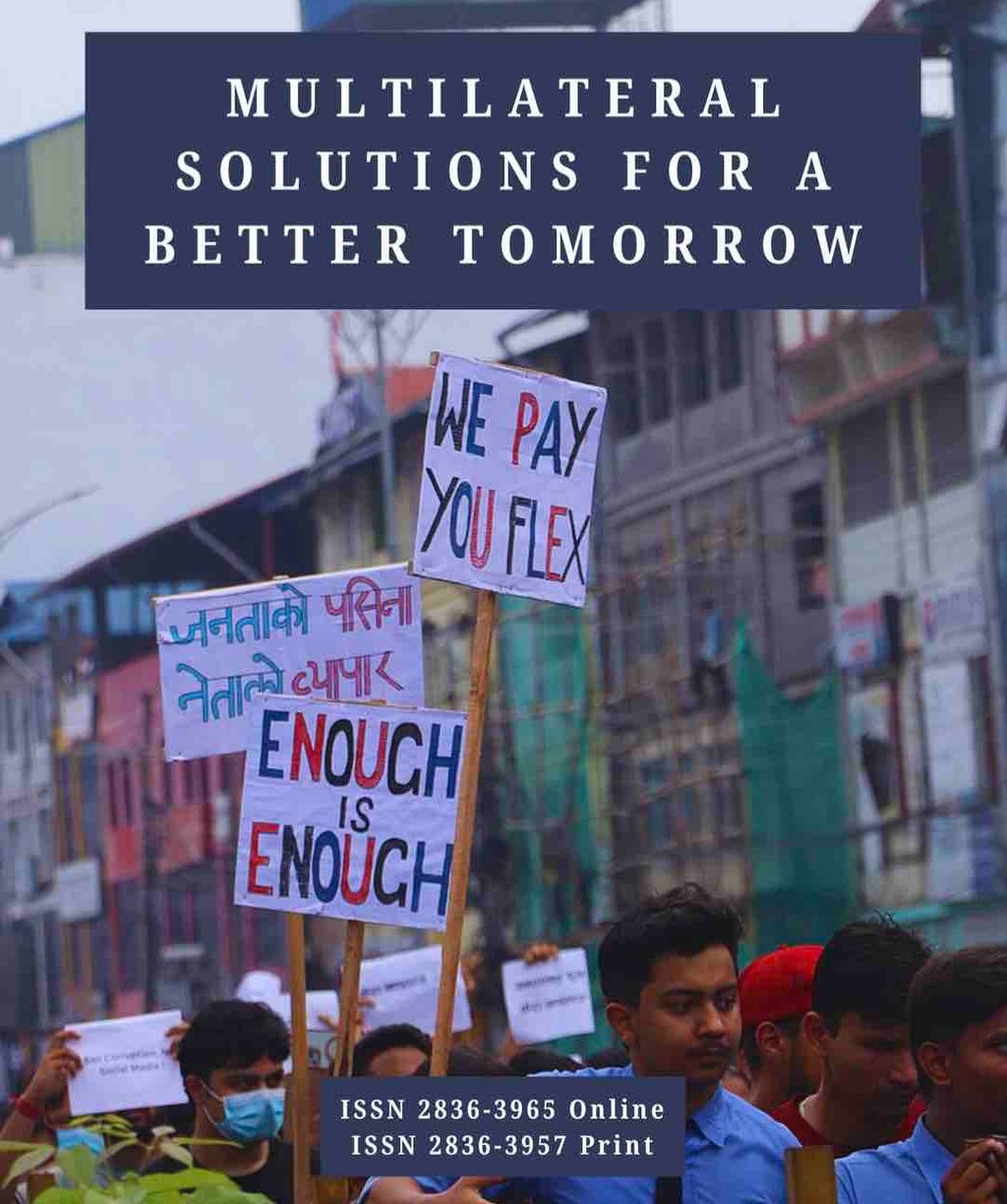
14 February 2026, Washington,D.C. In an era where unilateralism is increasingly amplified and geopolitical fragmentation is becoming the norm, a South Asian regional think tank SAFN convenes to reaffirm the enduring value of multilateralism. On the 30th Anniversary of The Millennium Project we are proud to launch the SAFN Monograph on Multilateralism in South Asia, published by SAFN in Washington, DC. This publication examines the region’s strategic crossroads and asks a timely question: can South Asia afford retreat when collective action is more necessary than ever? The report was launched by SAFN with collaboration with NIICE in Nepal. Jerome C. Glenn Co-Founder & CEO of the Millennium Project said "Climate change, digital transformation, labor mobility, and security threats do not respect sovereignty lines. Treating these issues in isolation weakens outcomes for all. The contributors therefore advance the idea of synergy among nations—that coordinated action can produce stability, resilience, and growth unattainable through unilateral approaches" .
The Editor of the Monograph Asanga Abeyagoonasekera highlighted that "This monograph, composed of eight analytical essays, examinesthe critical themes shaping the region’s future—governance, trust, infrastructure, multilateralism,migration, and security—while underscoring a fundamental truth: the path forward for South Asia must be built upon a synergetic relationship among its nations, bound by shared destinies and mutual responsibilities."
The first essay from Nepal, “A Perspective of Multilateralism: Nepal’s Present Crisis and Stability; the Importance of Multilateralism,” offers timely insight into how domestic political upheaval reshapes the multilateral behavior of small states, using Nepal’s 2025 crisis as a critical case study. By integrating key international relations theories, it deepens understanding of how multilateralism serves as a source of legitimacy, security, and strategic agency amid internal instability. The study also provides policy-relevant lessons on the critical role of youth inclusion and governance reform in sustaining effective and credible foreign policy engagement.
The second essay,“Constitutional Reforms and Infrastructure Development in South Asia,” explores how institutional frameworks and constitutional reforms can unlock regional potential. Infrastructure—both physical and institutional—is presented not merely as an economic driver, but as the foundation of social and political stability. As South Asian nations confront rapid urbanization and widening inequality, the essay calls for harmonized regional strategies and multilateral investments that transcend national boundaries, arguing that equitable development depends on collective governance mechanisms rather than competitive national advancement.
The third essay, “Reclaiming Multilateralism: Reforming Global Institutions for Tomorrow’s Challenges,” focuses on the global level. As international institutions struggle to respond effectively to pandemics, climate crises, and conflict, the paper contends that institutional reform is both urgent and unavoidable. It positions South Asia’s collective engagement as a potential catalyst for inclusive multilateralism, enabling the region to shape—rather than merely absorb— the contours of the evolving global order.
The fourth essay, “The State of Trust in South Asia,” examines one of the most intangible yet indispensable foundations of regional cooperation. While interpersonal trust rooted in familial, religious, and communal ties remains resilient, institutional distrust—fueled by political manipulation, disinformation, and historical grievances—continues to undermine governance and regional collaboration. The essay argues that restoring trust between citizens and institutions, and among neighboring states, is essential to rebuilding the moral infrastructure for peace and sustainable cooperation.
China’s expanding influence introduces a critical strategic dimension in the fifth essay, “Techno- Nationalism and the Digital Silk Road: China’s Expanding Sphere in the Indo-Pacific.” The paper analyzes how Beijing’s techno-nationalist ambitions, particularly through the Belt and Road Initiative, are reshaping South Asia’s geopolitical and digital landscape. It warns that fragmented national responses risk deepening dependency, and calls instead for a coordinated regional approach grounded in data sovereignty, transparency, and shared technological standards.
The sixth essay, “South Asia’s Polycrisis and Peripheral Resilience,” situates the region within a global environment marked by interconnected and overlapping crises. Climate change, pandemics, inflation, and political volatility interact across borders, reinforcing vulnerability. Yet the essay emphasizes that peripheral and smaller states possess adaptive capacities that, if integrated through regional policy coordination and shared early-warning systems, can transform crisis into collective resilience.
Labor migration, a vital economic artery for South Asia, is the focus of the seventh essay, “Towards a Multilateral Framework for Labor Mobility in South Asia.” Despite generating substantial remittance flows, migrant workers remain exposed due to fragmented bilateral agreements. The essay proposes a unified multilateral framework rooted in shared ethical and economic commitments, demonstrating how harmonized labor standards and collective negotiation can enhance protection, dignity, and developmental outcomes.
The final essay, “The Balochistan Liberation Army and the Regional Security Complex,” applies Barry Buzan’s Regional Security Complex Theory to examine the intersection of insurgency, foreign influence, and regional rivalries. It underscores that domestic conflicts such as the BLA insurgency cannot be isolated from broader South Asian security dynamics, particularly where India–Pakistan tensions and China’s strategic investments intersect. The study concludes by calling for collaborative intelligence-sharing and conflict-prevention mechanisms that recognize regional security as a shared, rather than zero-sum, responsibility.
Taken together, these eight contributions articulate a clear vision: South Asia’s future depends on synergy—on the conscious recognition that collective action can transcend historical divides and contemporary distrust. The challenges confronting the region are not confined by borders; neither should the solutions be. Economic interdependence, environmental stewardship, and security cooperation must be pursued through frameworks that privilege mutual benefit over competitive nationalism.
Click here to download the full report.