Asanga Abeyagoonasekera Delivers Keynote at Ho Chi Minh National Academy of Politics on Strategic Shifts at the South–Southeast Asia Intersection
Vietnam’s approach—anchored in resilience, integration, and diversified partnerships—offers important lessons for navigating intensifying major power rivalry while preserving sovereignty.
NEWS
SAFN
4/26/20262 min read
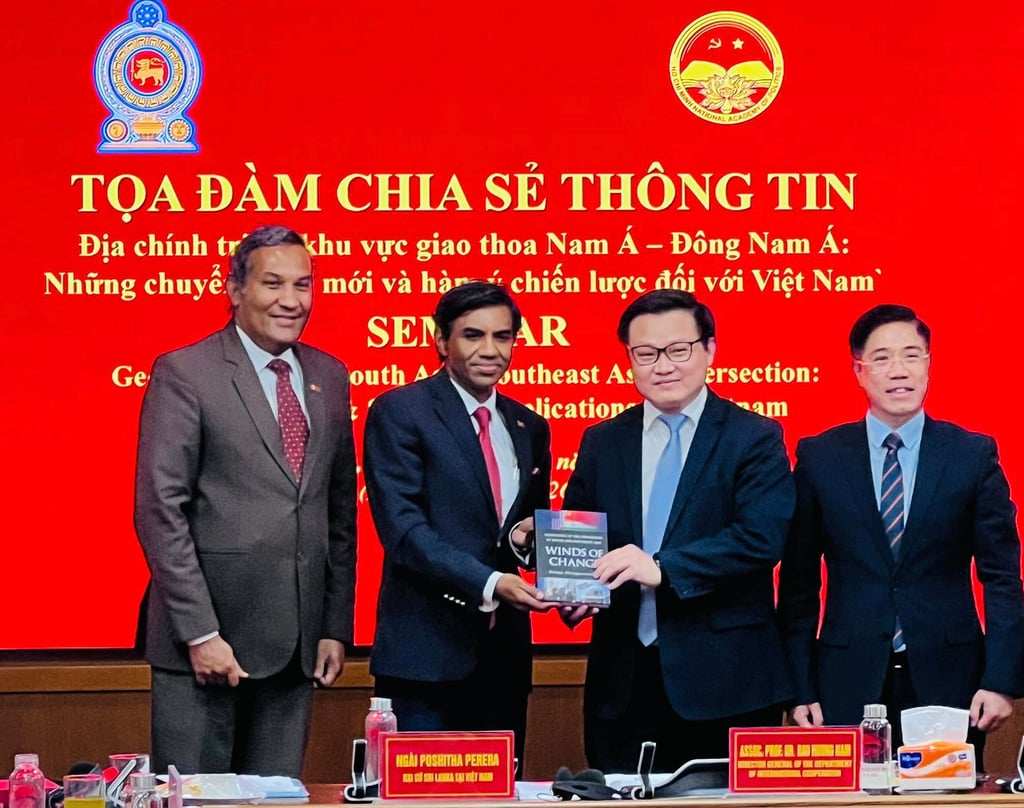
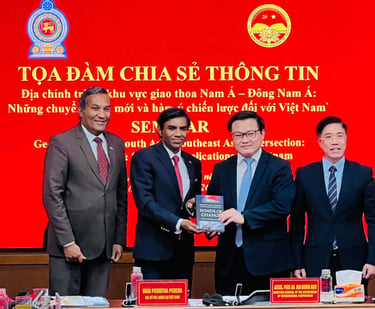
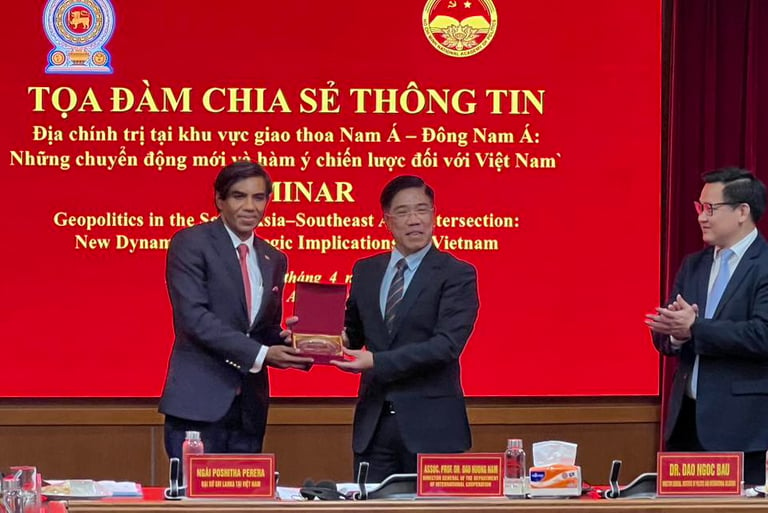
(Pic L-R: Sri Lankan Ambassador Poshitha Perera, Asanga Abeyagoonasekera, Prof. Dr. Dau Huong Nam Director General HCMA, Dr. Dao Ngoc Bau Director HCMA)
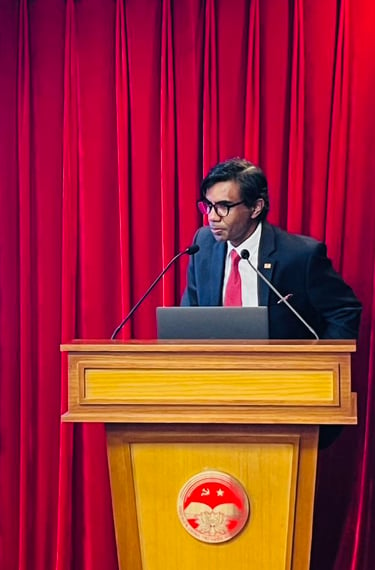
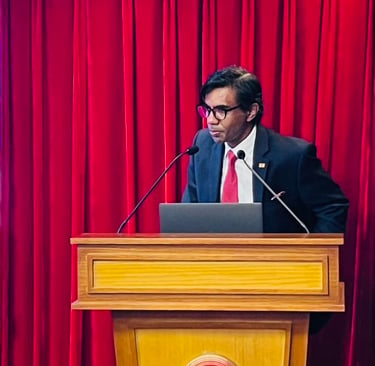
Hanoi, Vietnam | 26 April 2026 — Strategic affairs scholar and Sri Lankan author Asanga Abeyagoonasekera delivered a keynote address at the prestigious Ho Chi Minh National Academy of Politics (HCMA) in Hanoi on 23 April 2026, following an invitation from Vietnam’s leading government academy to discuss his latest book, Winds of Change, published by World Scientific Singapore.
Titled “Geopolitics in the South–Southeast Asia Intersection: New Dynamics and Strategic Implications for Vietnam,” the keynote brought together Sri Lanka’s Ambassador to Vietnam, H.E. Poshitha Perera, distinguished Vietnamese scholars, policymakers, and strategic experts for an exchange on the Indo-Pacific’s evolving geopolitical landscape, regional security dynamics, and the implications of great power competition.
In his address, Abeyagoonasekera underscored that South Asia and Southeast Asia can no longer be understood as separate geopolitical theatres, arguing that the Indian Ocean and South China Sea have become part of a single strategic continuum shaped by interconnected trade routes, maritime chokepoints, and shared vulnerabilities.
“Geopolitics is no longer experienced only by states, but by people,” he noted, emphasizing how conflict and strategic competition increasingly manifest through supply chain disruptions, inflationary pressures, and economic insecurity felt across societies.
Drawing from Winds of Change, he highlighted the growing importance of strategic chokepoints, the human consequences of geopolitical shocks, and the emergence of what he described as a “corridor of vulnerability” stretching across South and Southeast Asia.
A central focus of the lecture was Vietnam’s rise as an emerging middle power and its model of strategic autonomy through multi-alignment and 'bamboo diplomacy'. Abeyagoonasekera argued that Vietnam’s approach—anchored in resilience, integration, and diversified partnerships—offers important lessons for navigating intensifying major power rivalry while preserving sovereignty.
The keynote also explored the strategic significance of Vietnam–Sri Lanka cooperation within the broader Indo-Pacific maritime corridor, identifying opportunities in connectivity, maritime security, trade, and policy learning. He further reflected on the comparative relevance of two historically Marxist-influenced political traditions now in power—Vietnam and Sri Lanka—both increasingly shaped by pragmatic, market-oriented economic approaches, offering potential avenues for mutual learning.
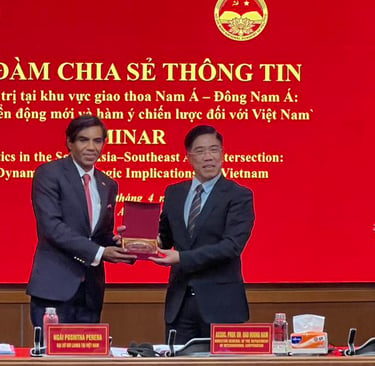
In a significant gesture of recognition, Director General Prof. Dr. Dau Huong Nam of HCMA presented Abeyagoonasekera with an award honouring his contribution to strategic dialogue at the Academy and recognizing the unique research underpinning the book.
The discussion was further enriched by the participation of distinguished scholars and Dr. Yap Kwong Weng, CEO of Vietnam SuperPort, whose perspectives added to the exchange on regional geopolitical risks and connectivity.
“The central question is no longer whether geopolitics will define the region—it already has,” Abeyagoonasekera concluded. “The challenge is whether states can transform vulnerability into resilience, and uncertainty into strategy.”
The event underscored the importance of deeper regional dialogue on ASEAN centrality, Indo-Pacific stability, and how middle powers can help shape a more resilient regional order amid accelerating global uncertainty.
Winds of Change examines shifting geopolitical currents in Asia and beyond, offering analysis on power transitions, strategic competition, and emerging security challenges across the Indo-Pacific.