MIDWEEK REVIEW Controversial post-Aragalaya defence partnerships
The South Asia Foresight Network (SAFN), a leading South Asian think tank, operating under the Millennium Project, recently appointed ex-US Department of State employee, Daya Gamage, who served at the American diplomatic mission, in Colombo, from 1970 to 1994, and Dr. Robert Boggs, with nearly four decades of field experience, as a political analyst across South Asia – from Kathmandu, Islamabad, and Delhi to Colombo – as Senior Fellows (Honorary).
NEWS
Shamindra Ferdinando - Republished by SAFN
11/22/202510 min read
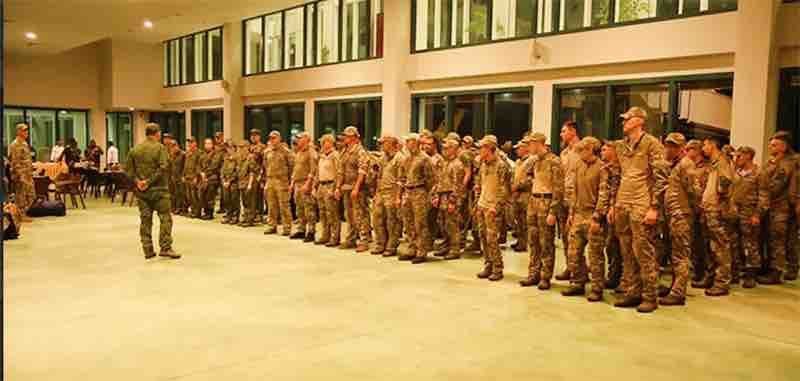
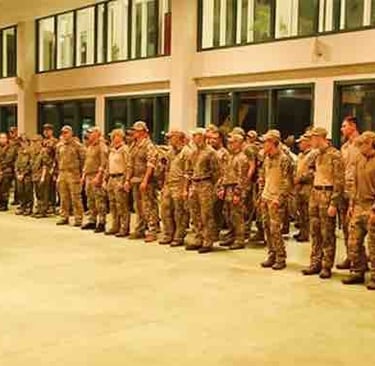
(The Island Newspaper, Colombo Nov 19,2025) The US almost succeeded in signing SOFA (Status of Forces Agreement) during the Yahapalana administration, as well as finalising the MCC (Millennium Challenge Corporation) meant to promote economic growth, open markets, and increased living standards in selected countries. SOFA was to allow deployment of US personnel in Sri Lanka. The then President Maithripala Sirisena thwarted SOFA while Premier Ranil Wickremesinghe’s representative Tilak Marapana was having discussions on the matter at the highest level in Washington.
Close on the heels of the first-ever joint tactical counter-terrorist exercise ‘Wolverine Path 2025,’ involving Russian and Sri Lankan troops, at the Army Training School, in Maduru Oya (25 Oct to 4 Nov 2025), Sri Lanka further expanded its partnership with the US.
The signing of a Memorandum of Understanding (MoU), formalising the defence partnership between the Montana National Guard, the US Coast Guard District 13, and the Sri Lanka Armed Forces, in terms of the Department of War’s State Partnership Programme (SPP), took place at the Defence Ministry here, on 14th Nov.
Julie Chung, who is serving as the US Ambassador in SL, since 25 February, 2022, Adjutant General of the Montana National Guard, Brigadier General Trenton Gibson, and the Secretary of Defence, Air Vice Marshal (retd.) Sampath Thuyacontha, signed the MoU.
The US, in a statement issued through the Public Diplomacy section of their Embassy, in Colombo, declared that the MoU marked a historic milestone in US-Sri Lanka defence relations, underscoring both nations’ shared commitment to regional stability, maritime security, and professional military collaboration in the Indo-Pacific to advance their common goal of peace through partnership.
Before we discuss the US-Sri Lanka relations, under the Trump-AKD administrations, let me focus on the Russia-Sri Lanka initiative. This should be deliberated, taking into consideration the US-led EU, UK reaction to the ongoing Russia-Ukraine war and the inevitable consequences. Direct accusations had been made against the US over the removal of Pakistan Prime Minister Imran Khan in April 2022 through the passage of a no-confidence motion, overthrowing of Sri Lankan President Gotabaya Rajapaksa, in July 2022, and Bangladesh Prime Minister Sheikh Hasina’s ouster in August 2024. Allegations have also been made regarding the toppling of Nepali Prime Minister K.P. Sharma Oli in September this year. In the cases of Pakistan and Nepal, direct references have been made apropos them earning the wrath of the US for not condemning the launch of thevRussian offensive in Feb 2022. But hardly any Westerner talks about the Maidan coup, staged by the US that toppled the then elected sitting Ukrainian President, which brought about the ensuing events.
The contingent of troops from the Russian Federation arrived in an Ilyushin Il-76, a multi-purpose, fixed-wing, four-engine turbofan strategic airlifter that landed at the Mattala Rajapaksa International Airport (MRIA), on the night of 24 Oct, and was welcomed by the Director General of Infantry, K.J.N.M.P.K. Nawarathna, GoC of 12 Division Maj. Gen. W.M.N.K.D. Bandara, and the Exercise Director, Maj. Gen. S.A.U.A. Solangaarachchi. There hadn’t been previous Russian military flights to Mattala in the Southern Province.
The Russian Embasy, in Colombo, said that the exercise was finalized in August this year.
Two days before the conclusion of ‘Wolverine Path 2025,’ the Russian Ambassador in Colombo, Levan Dzhagaryan, visited the Army Training School at Maduru Oya, his first to such a Lankan military facility. The Ambassador’s visit underscored Russia’s interest in further developing bilateral relations. Against the backdrop of the US seeking to isolate Russia, Moscow is determined to ensure such US efforts are countered at every possible level. Time-tested Russia-India relations seems to be the target of stepped-up US actions, meant to weaken New Delhi’s resolve to maintain the same. Russian President Putin’s visit to New Delhi emphasises the Moscow strategy as the US upped the ante.
Russian news agency TASS reported the exercise in a 5 Nov, 2025, online report, headlined ‘Russia, Sri Lanka hold first joint military exercise.’
Post-ACSA developments
The signing of the latest US-Sri Lanka defence agreement prompted a person, very much familiar with the developments taking place, to query whether the new MoU between the NPP government, which is led by the JVP that had been once a pretender of anti-Americanism and outwardly opposed Sri Lanka having anything to do with US imperialism, but would now allow the US to have access to Sri Lanka ports and airports?
It would be pertinent to mention that the JVP gave up the anti-American project, around 2009/2010, when it joined forces with the UNP to back retired war- winning General Sarath Fonseka’s candidature at the 2010 presidential election. That happened during Somawansa Amarasinghe’s leadership.
Had the JVP retained its much-hyped Marxist ideology, it couldn’t, under any circumstances, join that post-war political project that also involved the US. WikiLeaks shed light on the US involvement in the abortive bid to help Fonseka win the presidency.
The Illankai Thamil Arasu Kadchi (ITAK)-led Tamil National Alliance (TNA) that had to declare the Liberation Tigers of Tamil Eelam (LTTE) as the sole representative of the Tamil speaking people, in 2001, wouldn’t have thrown its weight behind the UNP-JVP project if not for the US pressure on their late leader R. Sampanthan. Although the JVP quit the UNP-led coalition, in 2019, to pave the way for JVP leader Anura Kumara Dissanayake to contest the presidential election under the NPP symbol, the US obviously remained a key factor in their overall thinking.
The latest US-Sri Lanka MoU on defence cannot be discussed in isolation. It wouldn’t be fair to find fault with the NPP without examining the gradual transformation of US-Sri Lanka relations in the defence field, beginning with the much-talked-about Acquisition and Cross-Servicing Agreement (ACSA), signed in March 2007. President Mahinda Rajapaksa’s government didn’t even bother to consult its coalition partners before the then Defence Secretary, Gotabaya Rajapaksa, signed the ACSA, on Sri Lanka’s behalf. The then US Ambassador, Robert O. Blake, signed on behalf of the US.
Those who had been critical of Sri Lanka entering into the ACSA never bothered to examine how Ambassador Blake intervened on behalf of Sri Lanka to pave the way for specific intelligence transfer during 2007 and 2008 to enable the Navy to destroy four LTTE floating warehouses, carrying weapons for the Tigers, on the high seas. Although ACSA was not meant to facilitate such assistance, the US decision may have been significantly influenced by Colombo entering into the ACSA for a period of 10 years.
In 2017, the Sirisena-Wickremesinghe Yahapalana government extended the agreement. The JVP, that backed Sirisena’s candidature at the 2015 presidential election and backed the Wickremesinghe-led government, though it refrained from taking any portfolios, but, interestingly, didn’t oppose the ACSA renewal. The ACSA is in operation today. The US has unrestricted access to all Sri Lankan ports, including the China-operated Hambantota port and airports.
It would be pertinent to mention that the 2007 ACSA consisted of just eight pages. But the 2017 ACSA comprised 83 pages. In spite of the controversy, the Yahapalana government never released it.
Thanks to the growing US-India political-military-economic-social relations, since 2014, US military activity here is no longer an issue. During the period the Soviet Union challenged the US supremacy, India, as a close ally of that grouping, strongly opposed the US role here. That attitude didn’t change even after the collapse of the Soviet Union as India remained suspicious of US strategies. In fact, the ACSA could have been finalised during Ranil Wickremesinghe’s premiership, in 2002, if not for New Delhi’s objections.
But Wickremesinghe, when he had the opportunity, gave the go ahead for the renewal of the ACSA, while President Sirisena tried to distance himself from that agreement.
NPP goes a step further
The JVP-led NPP government appears to have no qualms in going along with strategies – initiated years, if not decades ago, by interested parties. These strategies should be discussed taking into account the US-India partnership, India’s own approach to Sri Lanka and Sri Lanka’s relations with Quad countries, namely the US, Australia, Japan and India. The developing hostilities between the combined West, with the backing of India and China, are evident, though the ridiculous US stand pertained to India’s relations with Russia. The resumption of direct flights between India and China, after five years, couldn’t have happened at a better time as the West makes a determined bid to weaken major economies. Last year they reached a landmark agreement on border patrols.
Japan recently accommodated Sri Lanka in its Official Security Assistance (OSA) programme that can be described as an expansion of the Comprehensive Partnership, entered into in 2015. The two countries finalised an OSA agreement during President Anura Kumara Dissanayake’s visit to Tokyo, in late September this year, to pave the way for Japanese assistance to the Navy. Japan had never provided any armaments or equipment to Sri Lankan armed forces during the war, though Colombo Dockyard Limited (CDL), managed by Japan’s Onomichi Dockyard, sold Fast Attack Craft (FACs) to the Navy.
Now the Japanese had exited the CDL to enable India’s premier state-owned shipyard, Mazagon Dock Shipbuilders Limited (MDL), to pay USD 52.96 mn for 51% stake of the company. Mazagon is an enterprise affiliated with the Indian Defence Ministry.
The JVP simply ignored their erstwhile comrades Wimal Weerawansa and Frontline Socialist Party (Peratugami Pakshaya) protests over the Indian take-over of the CDL and the defence MoU signed in April this year, along with six other secret MoUs during Indian leader Narendra Modi’s visit here.
The signing of the latest US-Sri Lanka agreement indicates that the US strategy is on track. The NPP has proved, in no uncertain terms, its readiness to face challenges and proceed under extreme criticism, in and outside Parliament. The way the NPP government proceeded with US and Indian initiatives indicated that the government is sure of its approach. The NPP’s continued commitment to the International Monetary Fund (IMF)-led post-Aragalayarecovery programme somewhat wrong-footed the thoroughly disorganised Opposition.
The main Opposition Samagi Jana Balawegaya (SJB) has ended up endorsing the NPP’s approach, vis-a-vis India, by declaring its commitment and support for special relations with India. But the SJB remained silent on the NPP’s delaying a formal decision on President Ranil Wickremesinghe’s moratorium on Chinese research vessels visiting Sri Lanka during 2024. In spite of the NPP promise to make its position known on the issue, the government remains silent even at the end of 2025.
Ambassador Chung, who arrived here several weeks before the launch of Aragalaya on 31 March, 2022, throughout the violent protest campaign, unwaveringly threw her weight behind it. That campaign was brought to a successful conclusion on 09 July, 2022, when President Gotabaya Rajapaksa was forced to flee from the President’s House, by violent mobs, and clandestinely boarded SLNS Gajabahu, formerly USCGC Sherman, Hamilton-class high endurance cutter, to reach Trincomalee safely. The US interventions in Sri Lanka have to be examined against the backdrop of their strong-minded efforts to dislodge the Rajapaksas, against the backdrop of growing China-Sri Lanka relations.
On behalf of the US, Ambassador Chung worked behind the scenes, in mid-2022, to convince the then Speaker, Mahnda Yapa Abeywardena, to fill Gotabaya Rajapaksa’s vacancy. Had she succeeded, Ranil Wickremesinghe couldn’t have received the Parliament’s blessings to complete the remainder of Gotabaya Rajapaksa’s five-year term. Chung vigorously opposed Wickremesinghe’s decision to evict Aragalaya activists from the Old Parliament, and the Galle Face protest site.
The military thwarted the JVP bid to capture Parliament as Wickremesinghe stood his ground. Wickremesinghe should receive public appreciation for taking a stand against the bid to cause anarchy and Mahinda Yapa Abeywardena for declining the despicable US push for filling Gotabaya Rajapaksa’s vacancy, contrary to constitutional provisions.
The JVP, however, regardless of consequences, proceeded with what had been envisaged by Wickremesinghe. The UNP leader lacked the courage to enter into a MoU on defence with India. President Dissanayake did. No one would have thought any government would consider selling the controlling stake of CDL to India. President Dissanayake did.
Ironically this is the same party that led violent protests against India in the past, especially after the signing of the Indo-Lanka Accord of July 1987, even burning hundreds of Indian made state owned buses, already paid for by Sri Lankan tax payers, among other acts of brutal violence that killed so many innocent people.
Remember how the JVP led, and inspired protests, compelled President Gotabaya Rajapaksa to cancel the tripartite agreement involving India, Japan and Sri Lanka to develop the Eastern Container Terminal (ETC) during the 2020-2021 period. India and Japan teamed up with Sri Lanka’s leading conglomerate John Keells to develop the adjacent West Container Terminal (WCT) that commenced commercial operations in April 2025.
The FSP, over the last weekend, flayed the JVP over entering into another defence-related agreement with the US. Wasantha Mudalige, on behalf of the FSP, lambasted the government over entering into defence-related agreements with the US, India and Japan. Alleging that the government cooperated with those countries in line with their overall geo-political strategies.
An unprecedented Chinese reaction to Japanese comment on possible military intervention in support of Taiwan has underscored an extremely dangerous developing situation.
The finalisation of the US-India Defence Framework Agreement on 31 Oct, 2025, at a time the US has imposed, indisputably, one of the highest tariffs on any country, and new the Memorandum of Understanding (MoU) between India and Israel, signed four days later, to enhance defence, industrial, and technological cooperation, prove New Delhi’s firm commitment to overall US strategy. The US has gradually transformed its relations with India, since 1995, and recent developments indicate that there is no turning back. Sri Lanka, too, faces a similar situation.
SAFN taps Daya, Boggs
The South Asia Foresight Network (SAFN), a leading South Asian think tank, operating under the Millennium Project, recently appointed ex-US Department of State employee, Daya Gamage, who served at the American diplomatic mission, in Colombo, from 1970 to 1994, and Dr. Robert Boggs, with nearly four decades of field experience, as a political analyst across South Asia – from Kathmandu, Islamabad, and Delhi to Colombo – as Senior Fellows (Honorary).
Would the two ex-State Department employees make a difference by helping to improve fair coverage, thereby influencing the decision makers?
Gamage authored the widely discussed book Tamil Tigers’ Debt to America: US Foreign Policy Adventurism and Sri Lanka’s Dilemma, a critical study of the intersections between US foreign policy and Sri Lanka’s internal conflict dynamics. The 2016 book is a must read for those interested in knowing the truth.
SAFN has acknowledged that it felt the need to bring in Sri Lankan experts in the absence of sufficient knowledge and expertise to handle Sri Lanka issues, especially related to the West.
South Asia Foresight Network (SAFN) at the Millennium Project, in Washington DC, in which Asanga Abeygunasekera, son of the late controversial politician Ossie Abeygunasekera, killed in a Tiger suicide attack on a UNP election rally, along with its late leader, Gamini Dissanayake, and scores of others, is the Executive Director, is on record as having said Gamage and Boggs could be most useful to bridge this vast lacuna as they have the expertise and understanding to provide some enlightenment to issues not adequately addressed at present by the SAFN and Millennium Project.
By Shamindra Ferdinando Published by The Island Newspaper in Sri Lanka 11/19/2025